Oct 15, 2026

Blogging Strategy for Small Businesses
DraftSEO Team
Businesses that blog get about 55% more website visitors than those that don't, according to long-cited HubSpot research, but most small-business blogs go quiet within a few months. Blogging for small businesses is a slow compounding investment: posts often take 3-6 months to rank and keep earning for years after. This guide gives a lean plan for site owners and agencies with limited time and budget.
Decide First: Can You Sustain This for 6-12 Months?
Before you pick a topic, check your capacity. A blog that publishes eight posts and stops has paid the full setup cost and collected almost none of the return.
Set a Goal You Can Measure
Tie the blog to one business outcome, such as demo requests, quote forms or phone calls. Traffic alone is a weak goal. A plumber in Phoenix needs booked jobs, not 5,000 monthly visitors from people in other states.
Match Cadence to Your Real Hours
Two strong posts a month beat eight thin ones. Thin content ranks poorly and gives readers no reason to trust you. I'd start at two per month, and raise it only after six months of hitting that pace without strain.
Write for Customer Questions, Not Company News
Posts about your new hire or office move rarely get searched. Posts that answer a buyer's question do. Start with the questions your sales calls and emails already repeat.
Bottom-of-funnel topics come first. These are searches from people close to buying: pricing, comparisons, "best X for Y," and "X vs. Y." A post called "How Much Does a Kitchen Remodel Cost in Denver?" attracts a ready buyer. A post about your anniversary does not.
Pick Keywords a New Site Can Win
A new domain has little authority, so skip head terms like "email marketing." Target long phrases with clear intent, such as "email marketing for dental offices." In your keyword tool, look for low difficulty scores and check the live results. If the top ten are all national brands, move on.
| Post type | Buyer stage | Best use |
|---|---|---|
| Pricing or cost guide | Decision | Highest-intent traffic |
| Comparison (X vs. Y) | Decision | Wins buyers choosing between options |
| How-to | Consideration | Builds trust and links |
| Case study | Decision | Proof for warm leads |
Build a Small Cluster, Then Publish on a Schedule
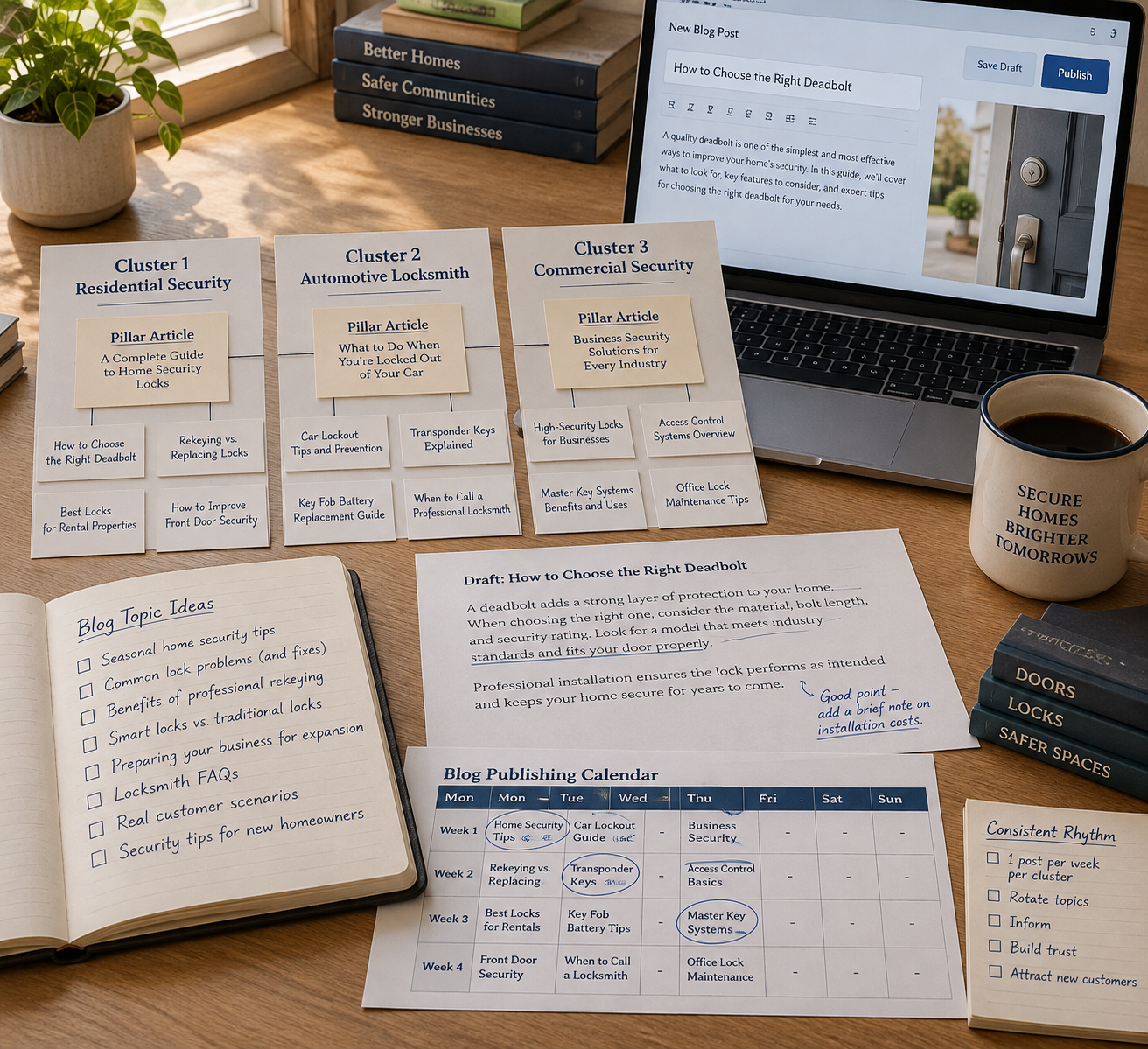
A topic cluster is one pillar post on a broad subject, supported by 4-6 narrower posts that link to it and to each other. Search engines read this structure as depth on one subject. A small business can build one cluster in about three to four months at two posts a month.
Keep the process repeatable. Here is a workable monthly routine:
- Pull 5-10 customer questions from sales calls, email and reviews.
- Check each against a keyword tool and drop anything too competitive.
- Write a brief with the target phrase, the question and the next step for the reader.
- Draft, then edit for accuracy and your own examples.
- Add internal links to the pillar and related posts.
- Publish and log the date and target keyword.
Consistency is where most blogs fail, and it is a fair place to automate. DraftSEO.ai generates 30 articles a month for connected sites and publishes through popular CMS integrations, which helps when the schedule is the weak point. Its drafts still need your edit for local detail and accuracy.
On-Page Basics, Calls to Action and Distribution
Each post needs the target phrase in the title, the URL and the first 100 words or so, plus a clear meta description. Use one H1, descriptive H2s and alt text on images. Nothing here is advanced; skipping it just wastes good writing.
Every post needs a next step. A post that ends with no call to action sends the reader back to search results. Match the offer to the stage: a quote form for cost guides, a checklist download for how-tos.
Promotion matters because a new post has no authority yet. Send it to your email list, share it in a local Facebook group or LinkedIn, and link it from relevant older pages. A short Q&A answer on Reddit or an industry forum, with a link only where it helps, can bring early readers.
Measure, Refresh and Automate With Care
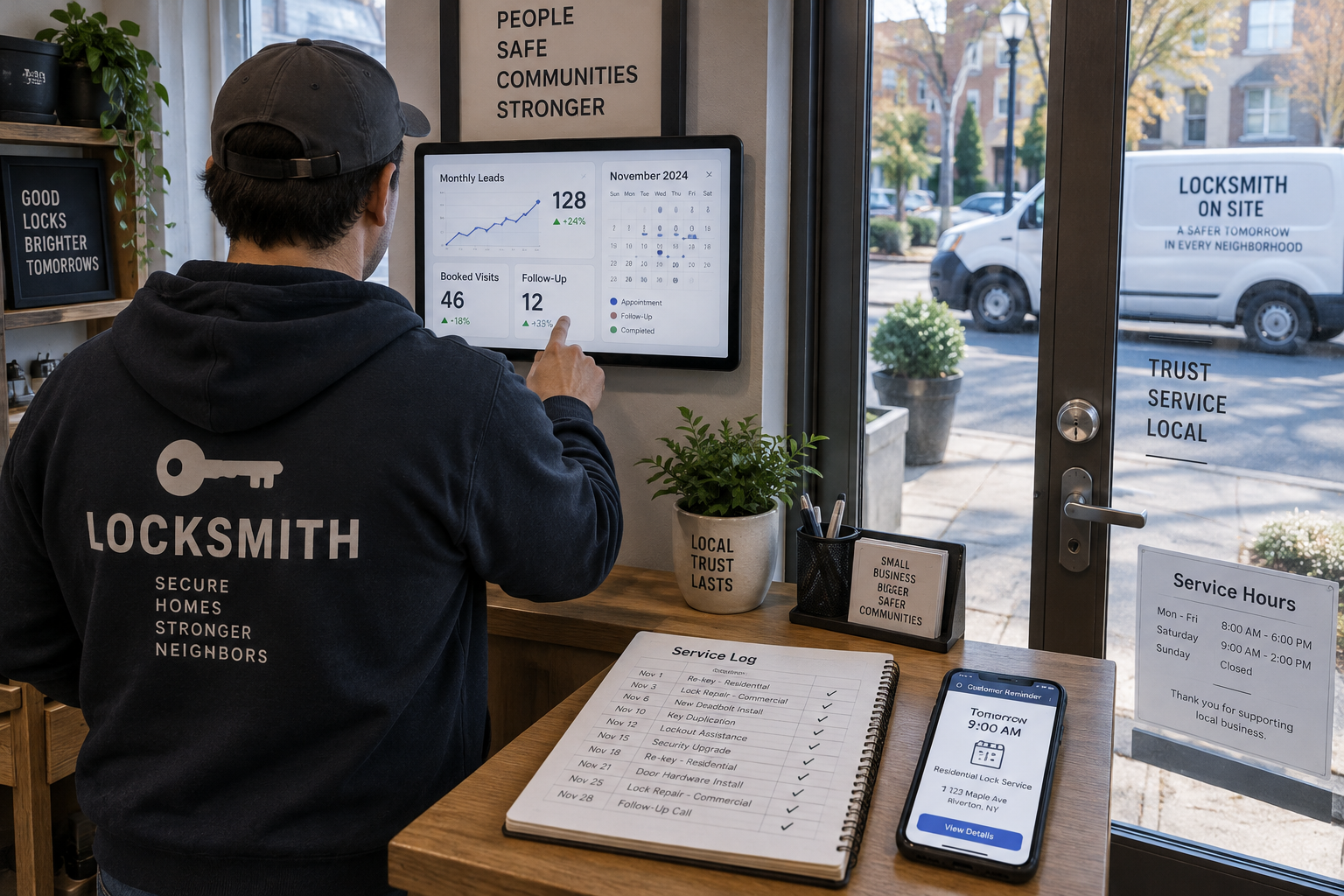
Open Google Search Console monthly. Check impressions, clicks and average position for each post. A post sitting at position 8-15 is a refresh candidate: add current data, tighten the answer and improve internal links.
Refresh Before You Write New
Updating a post that already has impressions usually beats starting from zero. Review every post at 6 and 12 months. You can also repurpose a strong guide into an email series or a short video script.
Use Automation Where Quality Holds
AI drafting saves the most time on outlines and first drafts. It saves the least on original examples, pricing and local knowledge, so edit those yourself. If you want to test this workflow, you can try DraftSEO.ai free with its starting credits and judge the drafts against your own standards.
One drawback to plan for: Search Console shows only your own data, so you'll need a separate tool for competitor rankings.
Frequently Asked Questions
How long does blogging take to bring in customers?
Expect 3-6 months before posts rank and 6-12 months before leads become steady. Low-competition, high-intent topics can pay off sooner. Judge progress by impressions in Search Console first, since clicks and leads follow them.
How often should a small business blog?
Two quality posts a month is a sound starting pace. It is enough to build a cluster within a year without burning out. Raise the pace only if quality holds and you have real questions left to answer.
Do I need a pillar post?
Not at the start. Publish two or three posts that answer specific buyer questions, then write a pillar once you see which subject draws impressions. A pillar written first often targets a term that's too broad for a new site.