Nov 14, 2026

AI Search Optimization GEO: How to Improve Your Content
DraftSEO Team
AI search optimization, or GEO (generative engine optimization), means making your content easy for AI systems to find, understand, trust and cite. It sits on top of SEO rather than replacing it. You don't need to rebuild your site. You need an edit pass on the pages that already rank, aimed at the few gaps that stop an AI answer from quoting you.
This guide gives you that pass step by step, plus a way to measure whether it worked.
Start With Pages That Already Rank
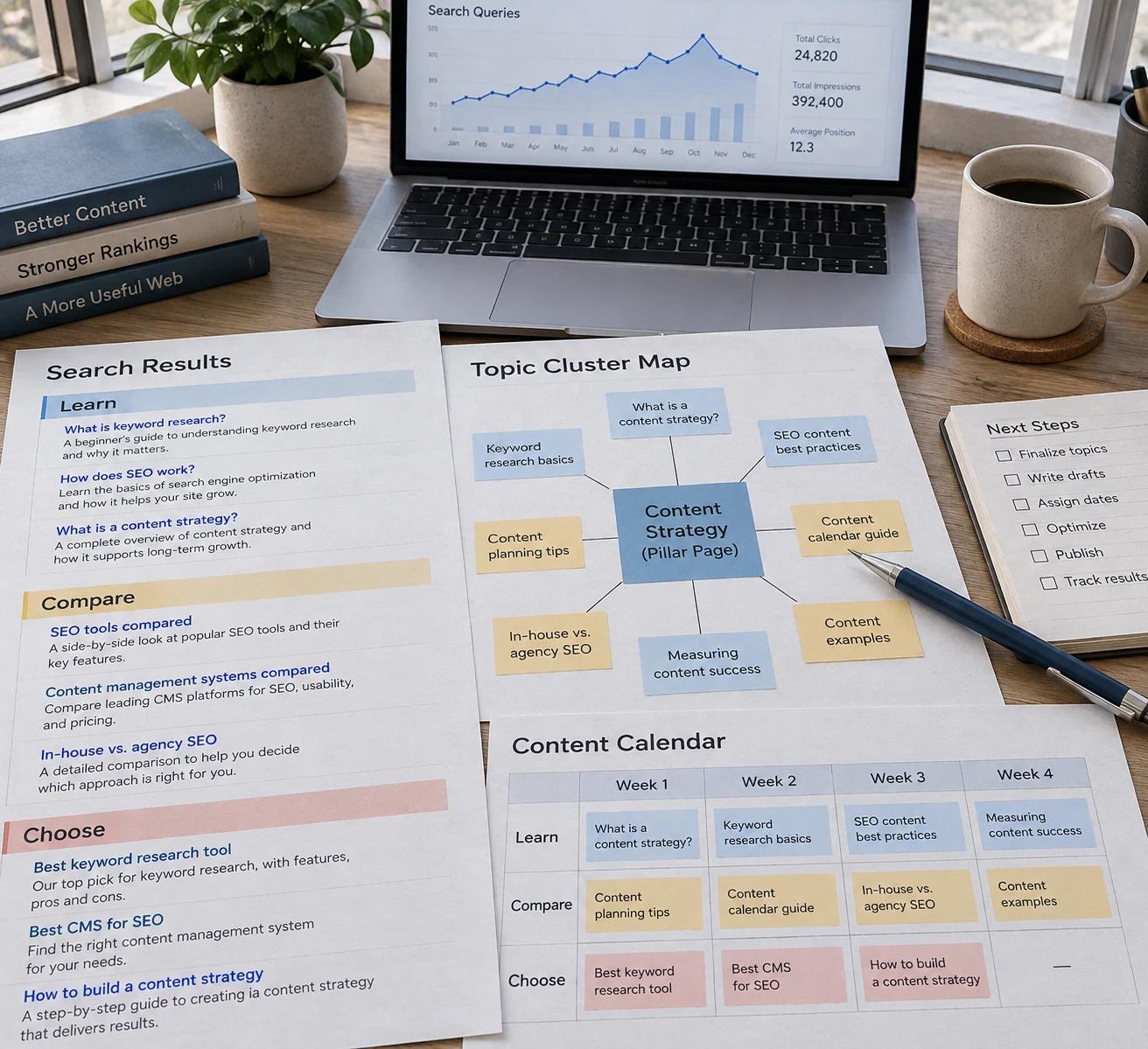
AI systems pull from pages they can already retrieve and trust, so your existing rankings are the best starting list. Open Google Search Console, sort by impressions, and pick the 10 to 20 pages that already earn them. Fix those first.
Don't spend time on tactics built for large brands, such as chasing hundreds of third-party mentions. A small site gets more from fixing structure and trust on its own pages.
Check Crawler Access First
If AI crawlers can't reach a page, nothing else matters. Open your robots.txt file and look for blocks on bots such as GPTBot, Google-Extended or PerplexityBot. Also confirm that key text appears in the HTML and isn't injected by JavaScript only after the page loads.
Robots.txt is a request, not a lock. Well-behaved crawlers obey it, but it doesn't hide private content. Allow AI crawlers on public pages you want cited, and keep sensitive material behind a password.
Keep the SEO Basics Intact
Fast loading, clean URLs and logical headings still come first. GEO work on a slow, messy page gets little return.
The Edit Pass: Six Steps for Each Page
Work through these in order. Each step is small, and most pages need only three or four of them.
- Add an answer block. Under each H2, give a direct answer in 40 to 60 words before any background.
- Match headings to real questions. Phrase H2s and H3s the way people ask them in ChatGPT or Gemini.
- Add original, citable material. Include your own numbers, a worked example, a comparison or a quote from a named expert, with sources for outside claims.
- Show who wrote it. Add an author name, credentials and a last-updated date. This supports E-E-A-T (experience, expertise, authoritativeness, trust).
- Add schema markup. Use Article, FAQPage and Organization structured data so machines can read the page type and your brand as an entity.
- Link related pages. Connect the page to its topic cluster so AI systems see depth on the subject, not one isolated post.
Schema doesn't guarantee a citation. It removes ambiguity, which helps retrieval, and it costs little to add.
Generic text is the biggest blocker. If your page repeats what ten others say, an AI system has no reason to pick yours. Original data and firsthand detail are what make a page distinct.
For producing articles with this structure from the start, DraftSEO.ai writes each one with H2/H3 headings, FAQ sections, data tables and a meta description, then publishes it to your site.
How SEO, AEO and GEO Differ
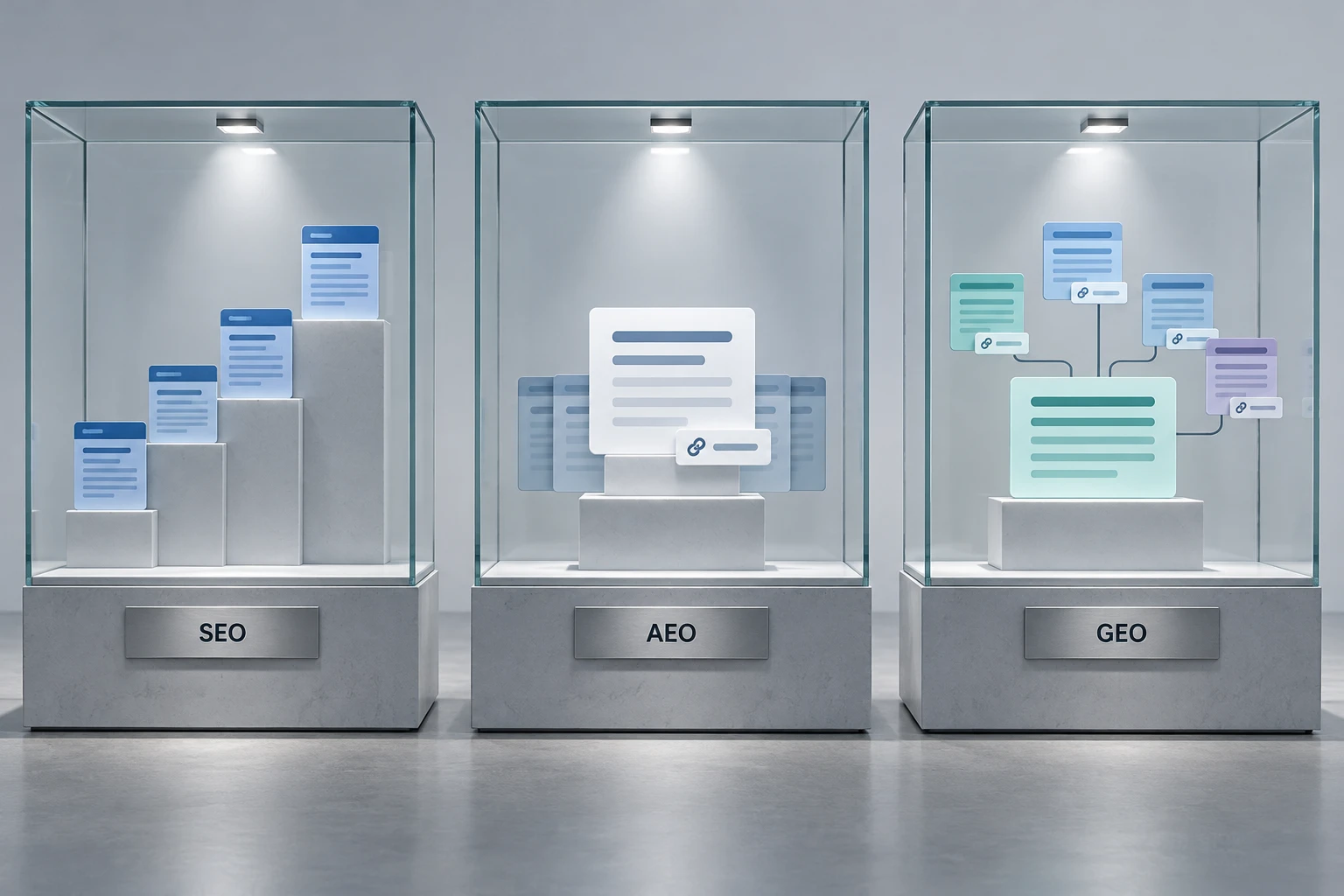
These three overlap, but they aim at different results. Use the table to decide where each page needs work.
| Approach | Main goal | Key tactics | Success signal |
|---|---|---|---|
| SEO | Rank pages in search results | Keywords, backlinks, site speed | Rankings, clicks |
| AEO (answer engine optimization) | Supply the direct answer | Answer blocks, FAQ and HowTo formats | Featured answers, AI Overview inclusion |
| GEO | Be cited in generated answers | Original data, entities, E-E-A-T, schema | Citations, brand mentions |
The 80/20 rule applies here too. A small share of your pages typically drives most of your traffic, so refresh those first. Refresh priority pages at least quarterly, updating data, adding questions and replacing dead links.
Measuring AI Visibility Beyond Rankings
Rankings alone miss how people now find brands. Google reported in May 2026 that AI Mode passed one billion monthly users, so AI answers are a real traffic source.
Track three things:
- Citations: how often an AI answer links your page as a source.
- Mentions: how often your brand appears in an answer, with or without a link.
- AI referral traffic: visits from chatgpt.com, gemini.google.com or perplexity.ai, which you can filter in GA4 under traffic acquisition.
Citations suggest your content is accessible and trusted. Mentions show you're present in the conversation. Results vary by platform and prompt, so test 15 to 20 real questions in your niche each month and record which tools name you.
Publishing steadily matters because freshness and topic depth build over time. You can try DraftSEO.ai on your first site free through its pricing page and see how the articles read before you commit.
Frequently Asked Questions
Does schema markup help AI search visibility?
It helps indirectly. Schema labels your content type, author and brand so systems read the page correctly, but it doesn't force a citation. Clear answers, original data and trust signals matter more.
Should I allow AI crawlers in robots.txt?
Yes, for public pages you want cited. Blocking GPTBot or similar bots removes you from their answers. Check that key content loads in plain HTML, and use passwords, not robots.txt, to protect private files.
How do you get cited by ChatGPT, Gemini and Google AI Overviews?
Rank well first, then make each page quotable: a 40–60-word answer under each heading, original data, named sources and a visible author. Then track citations monthly to see which edits worked.
References
[1] How GEO Improves Content Visibility in AI-Powered Search
[2] AI Search Optimization Guide: AEO + GEO (2025)
[3] How to Optimize Your Content for AI Search Visibility - Lumar
[4] The Complete Guide to AI-First Content Optimization 2026
[5] How to Optimize for AI Search: A Practical GEO Framework
[6] The Complete Guide to AI Search Optimization (AEO, GEO .
[7] GEO Best Practices 2026 - On-Site SEO & AI Optimization .
[8] AI Search Visibility KPIs: Citations and Referral Traffic
[9] Robots.txt Introduction and Guide | Google Search Central