Oct 23, 2026

AI SEO Blog Writer: What to Look for in a Tool
DraftSEO Team
Entry pricing for AI SEO tools in March 2026 ran from $39 a month (Frase, Writesonic) to $200 a month (AirOps), and the sticker price tells you little about what an article really costs. If you're shopping for an ai seo blog writer, pick one that researches keywords and search intent, builds structured drafts, adds links and media, publishes to your CMS, and keeps editing easy. Judge it on accuracy, voice control, workflow fit and total cost per article, not speed alone.
Three Tool Types, Three Different Jobs
Most tools fall into one of three groups, and mixing them up is the most common buying mistake. An optimizer grades a draft you wrote. A full writer drafts the article for you. An autopilot also picks topics and publishes on a schedule.
The table below shows what each type covers and what you still do by hand.
| Tool type | What it does | You still handle | Best fit |
|---|---|---|---|
| Optimizer (Surfer, Clearscope) | Scores drafts against top-ranking pages | Writing, linking, images, uploading | Sites with a strong human writer |
| Full writer | Drafts from a keyword or brief | Topic choice, linking, media, publishing | Teams that plan their own calendar |
| Autopilot | Researches, writes, publishes on a schedule | Review and fact-checking | Sites needing steady output with few staff |
A cheap optimizer plus a skilled human writer often beats a full AI writer. This is true when your topics need firsthand experience, such as product testing or local expertise. The drawback is cost in time: the writer's hours dwarf the software fee.
The Checklist: What Separates a Rankable Draft From Filler
Start with the features that decide whether an article can rank at all. Speed comes last.
Intent and Research
The tool should read the live results for your keyword and build the brief from them. If the top ten results are comparison pages and the tool writes a definition post, no optimization score will save it. A high content score on the wrong format still fails. Check that keyword research is built in, so you aren't pasting terms between tabs.
Structure and Citation Readiness
Look for clean H2/H3 headings, a written meta description, FAQ blocks and data tables. Direct answers under question headings also help your pages get quoted in AI answers from ChatGPT or Gemini. Tools that output a wall of text push that formatting work back to you.
Accuracy and Voice
Every tool can produce a wrong statistic. Ask whether it cites sources you can click, and whether you can set a brand voice and edit inline. Hallucination checks (catching invented facts) are still mostly human work, so budget for them.
Workflow Cost: Where the Real Price Hides
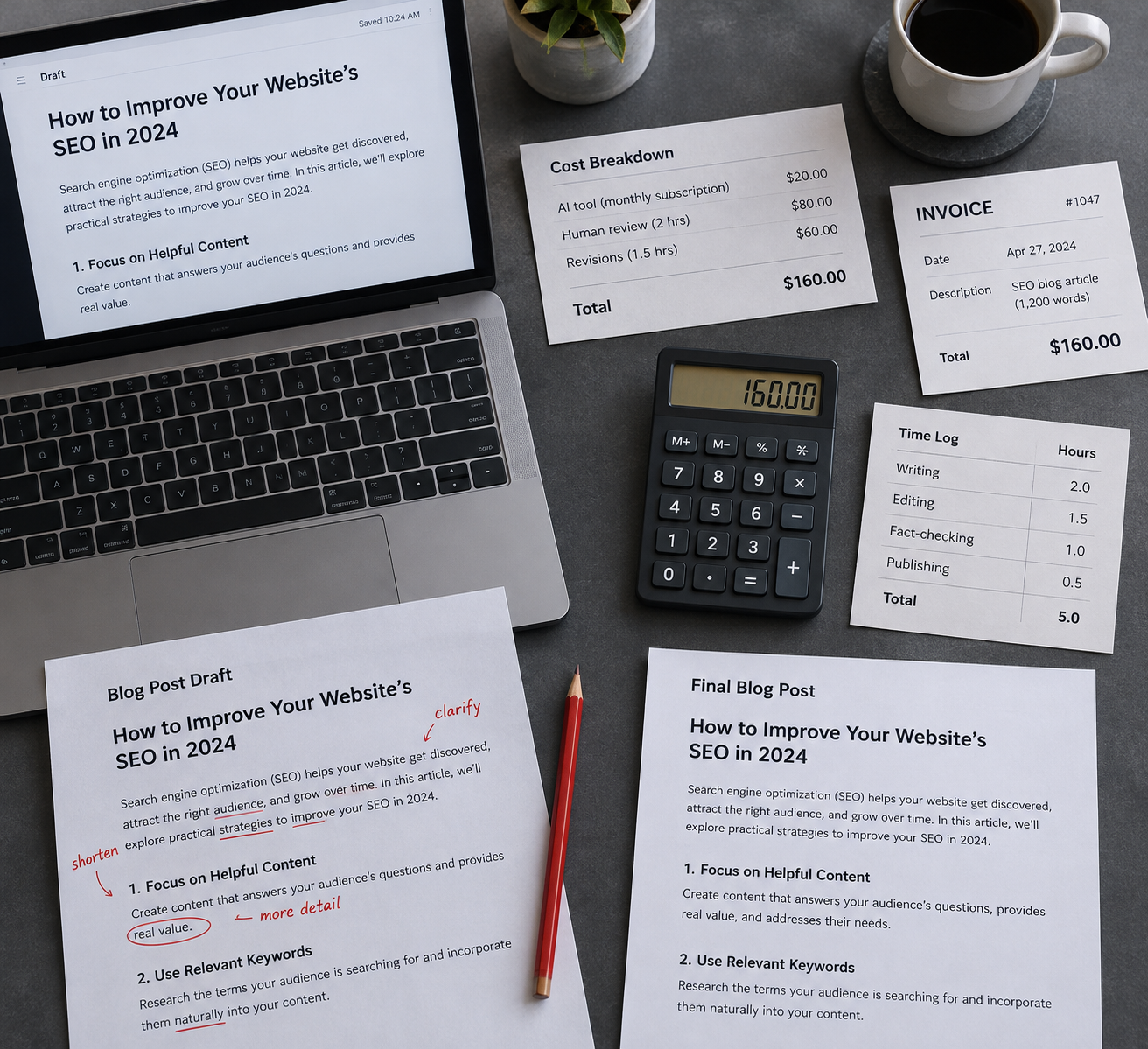
Add up the minutes per article, not just the monthly fee. Formatting, finding images, adding internal links and uploading to WordPress each take 5 to 15 minutes by hand. Across 30 articles a month, that adds up to a part-time job.
Integrated tools remove most of it. Weak WordPress integration often means lost formatting and extra plugin steps. Automated internal linking matters more than it sounds, because links between your own posts help search engines understand how topics connect.
DraftSEO.ai covers this part of the workflow: it adds internal links, images and videos, then publishes straight to WordPress, Shopify, Webflow and other platforms without copy-paste.
Also compare limits, not only headline price. Check article caps per month, whether pricing is per site, and whether unused articles roll over. On DraftSEO.ai, for example, each connected site costs $39 a month with 30 articles, and unused articles don't carry over. More articles per month doesn't mean more traffic either. Thirty thin posts rank worse than ten good ones.
Test Before You Buy, and Spot the Red Flags

Run the same trial on every tool you're considering:
- Pick one keyword where you know what ranks today.
- Generate the article and compare its format to the top three results.
- Fact-check every number and named claim.
- Time how long it takes to edit the draft to publishable quality.
- Publish it to a staging site and note what broke.
- Divide total time and cost by one article.
Walk away if you see any of these:
- No way to edit or set a voice before publishing
- Claims of guaranteed rankings (no tool can promise them)
- Output that looks identical across unrelated topics
- Pricing that hides site or article limits
Raw output also needs a human pass. Add original experience, real examples and a named author, since E-E-A-T (experience, expertise, authoritativeness, trust) signals come from you, not the model. Autopilot tools suit steady output, and you can try one free: the DraftSEO.ai free trial gives your first site 3 articles with no credit card.
Frequently Asked Questions
Can AI-written blog posts rank on Google?
Yes, if they satisfy the search intent, are accurate and add something original. Google doesn't promise to reward or penalize content by how it was made. Unedited, generic drafts tend to fail because they match what already exists.
Do I still need to edit AI blog posts?
Yes. Plan a review for facts, voice and original experience on every article. Editing time is the cost most buyers underestimate, so measure it during your test run.
Are free AI SEO writers good enough?
For a single test or a hobby blog, sometimes. Free tiers usually cap article counts and lack publishing, linking and media features, so you pay in manual work. Use them to test quality, then price the full workflow.
References
[1] Best AI Tool for Writing SEO-Rich Blog Content
[2] 7 Best SEO Content Writing Tools for AI-Powered Blog .
[3] 13 best AI SEO content writer tools that write like humans
[4] 7 best AI tools for writing SEO rich blog content in 2026
[5] Best AI Writing Tools in 2026 (Tested & Reviewed for .
[6] 12 Best AI Tools for Bloggers in 2026 (Tested on Real Blogs)
[7] 5 Best AI Blog Writing Tools for SEO in 2026
[8] AI SEO Tools Compared: 12 Tools, Real Pricing, and What .