Aug 5, 2026

Writesonic Alternative: 7 Best Picks for 2026
DraftSEO Team
Writesonic charges $39 a month for its Standard plan and caps output at roughly 200,000 words, which sounds generous until you factor in editing time. A Writesonic alternative becomes worth investigating once you realize most AI writers still hand you a draft, not a published article. That gap between "text generated" and "post live on your site" is the real cost most people underestimate when they budget for content.
If you're comparing tools in 2026, the search intent is usually one of three things: lower price, better SEO structure, or less manual work per article. This roundup sorts seven options against those three needs, not just a feature checklist.
Why Most Writesonic Alternatives Solve the Wrong Problem
The core issue with Writesonic and most competitors isn't writing quality. It's that they stop at the draft. You still have to format the article, add internal links, insert images, check for AI detection risk, and publish it to WordPress or whatever CMS you run.
That's three to five hours of manual work per article, even with a good AI draft. Multiply that by 30 articles a month and you've built yourself a part-time job, not an automation system.
The Autopilot Content Generation Option
An autopilot content generation option removes that gap by handling research, writing, and publishing as one pipeline instead of three separate steps. DraftSEO.ai works this way: it generates 30 articles monthly for each connected site and integrates directly with popular CMS platforms, so posts go live without a manual export-and-paste step. You can see current plan details on the DraftSEO.ai pricing page.
Why This Distinction Matters for Rankings
A drafting tool and a publishing tool produce different outcomes even from identical text. If an article sits in a queue for two weeks waiting on manual formatting, you lose the compounding effect of consistent publishing frequency, which search engines and AI answer engines both reward.
Comparing the 7 Alternatives on Structure, Not Just Features
Feature lists are misleading because they don't show whether the output is ranking-ready — meaning it has proper heading hierarchy, internal linking, schema-friendly formatting, and enough originality to pass AI detection scrutiny. Here's how seven tools stack up on that basis.
| Tool | Starting Price/Month | Publishes Autonomously? | CMS Integration | Free Trial |
|---|---|---|---|---|
| Writesonic | $39 | No — draft only | Manual export | Yes, limited credits |
| Jasper | $49 | No | Plugin-based | Yes |
| Copy.ai | $49 | No | Manual export | Yes |
| Surfer SEO | $89 | No (editor only) | WordPress plugin | Limited demo |
| Content at Scale | $250+ | Partial | WordPress | No |
| Rytr | $9 | No | None native | Yes |
| DraftSEO.ai | See pricing page | Yes | Native CMS publishing | Yes, with initial credits |
Where Content Quality and Originality Actually Break Down
Bulk article generation tools tend to fail on originality when they're pushed to output 20-30 pieces fast, especially on overlapping keyword clusters. The fix isn't slowing down output — it's making sure the tool does topic-specific research per article rather than templating the same structure with swapped keywords. Ask any tool you trial for a sample batch of 10 articles on related keywords and check for repeated sentence patterns before committing.
Keyword Research and Editing Workflow Fit
Some alternatives, like Surfer SEO, are strong at keyword and SERP-gap analysis but weak at autonomous publishing — you'll still need a human in the loop to move content live. Others fold keyword targeting into the generation step itself, which reduces the editing workflow to a quick review pass rather than a rewrite.
Common Mistakes When Switching Tools
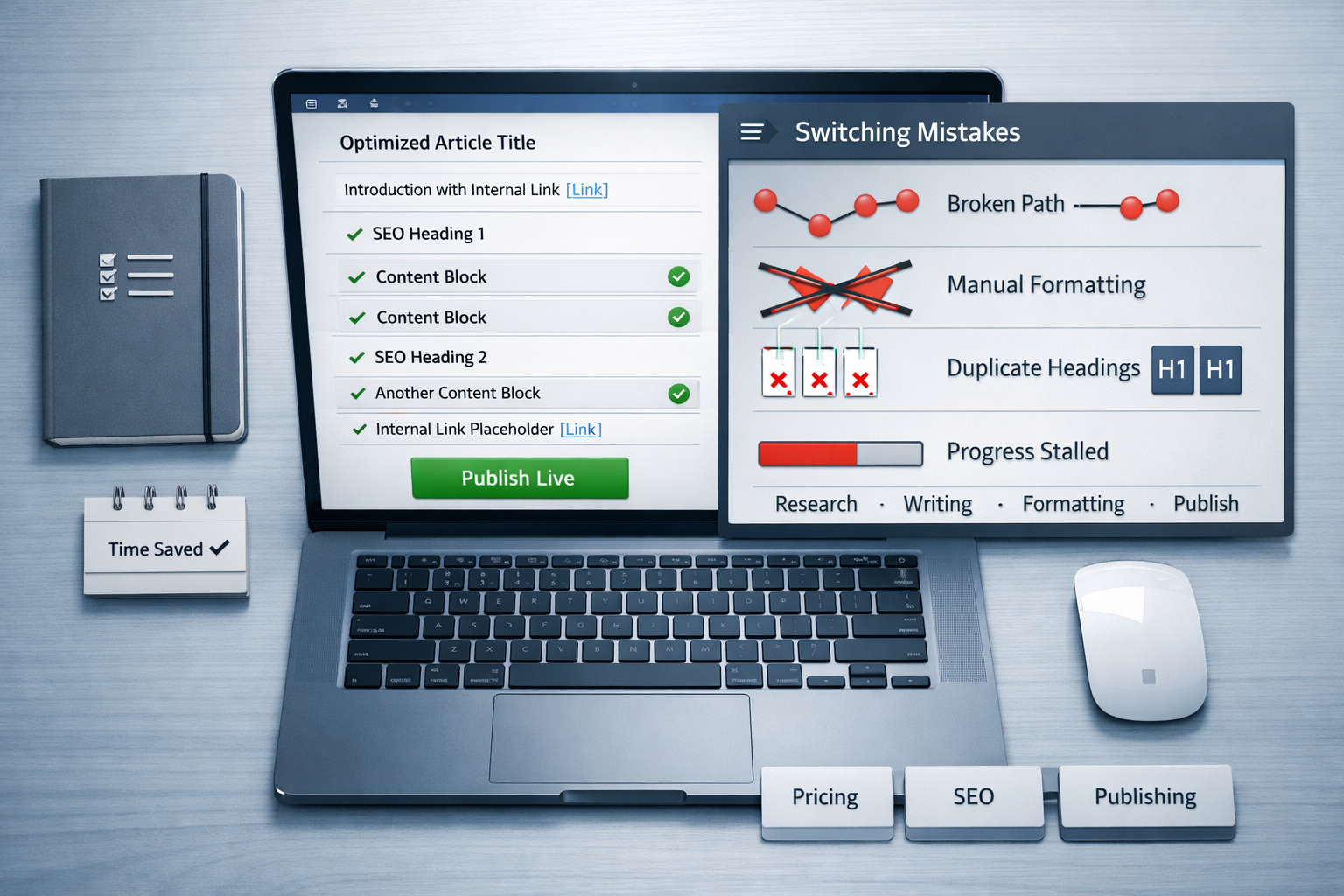
Site owners moving off Writesonic tend to repeat the same handful of errors, usually because they're optimizing for the wrong variable.
- Picking the cheapest plan without checking if the output needs a full rewrite before it's publishable.
- Assuming every AI writer can publish autonomously — most only draft, no matter what the marketing copy implies.
- Ignoring CMS compatibility until after signing up, then discovering the plugin doesn't support a custom WordPress theme.
- Chasing feature count (grammar checkers, tone sliders, plagiarism scans) instead of checking whether the article structure actually satisfies search intent.
- Skipping a test batch and committing to an annual plan on the first month's output.
- Underestimating AI detection risk on bulk-generated content aimed at YMYL or competitive niches.
Each of these mistakes traces back to evaluating tools on price or feature count rather than on whether the output reaches "live and indexable" without your intervention. That's the variable that determines whether switching tools actually saves time.
Pricing and Free Trial Comparison Before You Commit

Run a free trial before paying for anything — every tool in this list, including Writesonic, offers one, and the differences show up fast once you compare drafts side by side. Writesonic's entry plan sits at $39 a month; Jasper and Copy.ai land near $49; Surfer SEO starts around $89 but doesn't generate full articles on its own.
Content at Scale runs considerably higher, often $250 or more monthly, positioned for agencies producing high volume. DraftSEO.ai includes a free trial with initial credits, letting you test the full research-to-publish pipeline on your own site before paying anything. You can compare plan tiers directly on the DraftSEO.ai pricing page and start the trial from there.
The honest comparison isn't which tool is cheapest per word. It's which tool gets an article from keyword idea to published, indexed page with the least manual intervention from you.
Frequently Asked Questions
Is Writesonic good for long-term SEO content, or just quick drafts?
Writesonic is solid for quick drafts and short-form copy, but it doesn't publish content or manage CMS integration on its own. For sustained SEO output, you'll still need a separate publishing workflow or a tool that includes one.
Does switching to an alternative risk losing content quality?
Not inherently — quality depends on the research step, not the interface. The bigger risk is originality drops when a tool templates dozens of articles from the same keyword cluster without fresh research per piece.
Can any of these tools fully replace a human editor?
No tool eliminates review entirely, but autonomous publishing platforms reduce editing to a spot-check rather than a rewrite, since structure and CMS formatting are handled before the article reaches you.