Sep 7, 2026

Sudowrite Alternatives: DraftSEO.ai vs Sudowrite
DraftSEO Team
Sudowrite has raised over $3 million and built a loyal base of novelists who use it to draft fiction faster. That's the wrong benchmark for anyone typing "sudowrite alternatives" while trying to grow organic traffic. If you're comparing tools to publish keyword-targeted articles at scale, you're not shopping in the same category Sudowrite was built for.
That mismatch is the actual story behind most "Sudowrite alternatives" roundups. They stack Sudowrite against Jasper, Copy.ai, or Rytr as if all four solve the same problem. They don't. This article separates fiction-writing assistants from SEO content systems, so you pick based on what you're actually publishing.
Sudowrite Was Built for Novelists, Not Search Rankings
Sudowrite is a creative writing assistant. Its core features (Story Bible, Canvas, Feedback) are designed to help fiction authors outline plots, keep character details straight, and beat writer's block on a manuscript. None of that touches keyword research, meta descriptions, header structure, or internal linking.
That's not a knock on the product. It does what it's built for well. The problem is expectation: an SEO content writer opening Sudowrite looking for a keyword-to-published-article pipeline will find a blank canvas and a prose generator, not a research-and-publish system.
What Sudowrite Actually Optimizes For
Sudowrite tools are tuned for voice, tone consistency across chapters, and dialogue that sounds human. There's no built-in SERP analysis, no schema markup, no CMS auto-publish. You'd still write the article, then manually format and post it somewhere else.
Why This Confuses SEO Buyers
Search intent for "sudowrite alternatives" often comes from people who tried Sudowrite for blog content, got generic prose with no ranking structure, and assumed the fix was another general-purpose AI writer. The real fix is a tool built around search intent from the first prompt, not creative flow.
An SEO-Focused Alternative: How DraftSEO.ai Approaches the Problem Differently
If your goal is organic traffic, not manuscript pages, DraftSEO.ai is built around that goal from the ground up. The platform takes a niche input and generates 30 articles a month structured for search engines and for AI answer engines like ChatGPT, then publishes them automatically to a connected site.
The mechanism matters here. Instead of a blank prompt box, DraftSEO.ai runs research and structuring steps before a single sentence gets drafted, aiming for headings, formatting, and topical coverage that match what ranks. You can see current plans and what's included in each tier on the DraftSEO.ai pricing page.
This doesn't mean zero setup. You still connect your CMS, set your niche parameters, and review output before it goes live if you want editorial control. But the workflow is built around publishing volume with SEO structure, which is a different job than helping someone finish chapter twelve.
Comparing the Full Field: Sudowrite, Jasper, Copy.ai, Rytr, DraftSEO.ai
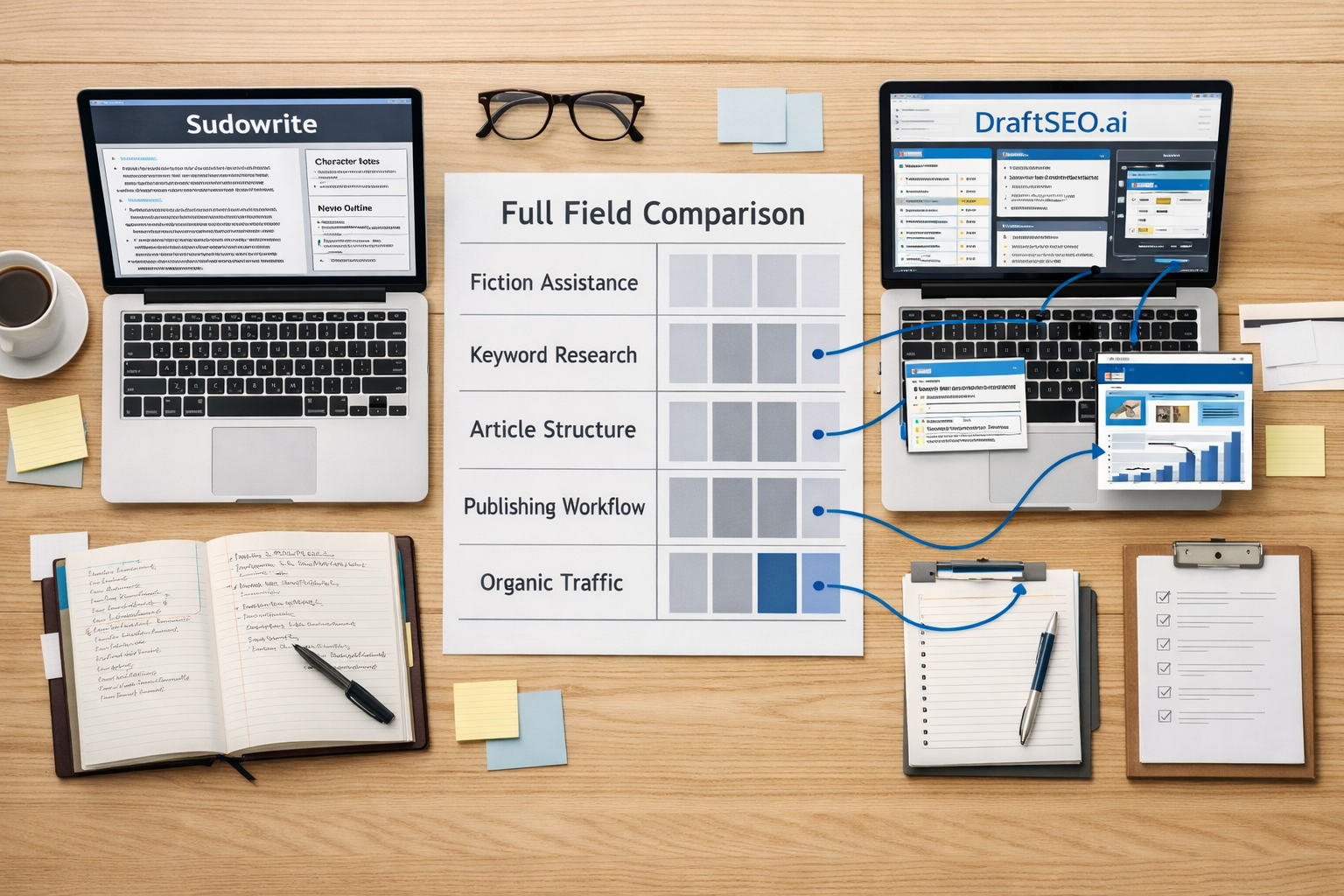
Price alone won't tell you which tool fits. A $29-a-month plan that outputs unstructured paragraphs is worse value than a pricier plan that ships publish-ready articles, if your job is ranking pages. Compare by use case first, then cost.
| Tool | Built primarily for | Publishing/CMS integration | Article volume model |
|---|---|---|---|
| Sudowrite | Fiction and creative writing | None (manual export) | Per-project, not article-count based |
| Jasper AI | Marketing copy, brand content | Some integrations, add-on setup | Credit/word-based plans |
| Copy.ai | Short-form marketing copy, workflows | Limited native publishing | Word/task-based tiers |
| Rytr | General short-form copy | None native | Character-based tiers |
| DraftSEO.ai | SEO-structured articles for organic traffic | Native CMS integration | 30 articles/month for connected sites |
Jasper and Copy.ai sit closer to marketing-copy generators, useful for ad text, product descriptions, and social captions, but they weren't built to run a monthly SEO content calendar on autopilot. Rytr is often the cheapest of the group and fine for short snippets, but it doesn't handle long-form structure or publishing.
The Volume-and-Structure Trap
A common mistake: picking a tool because it's the cheapest per word, without checking whether the output includes proper H2/H3 structure, internal linking cues, or meta descriptions. Cheap words that need a full rewrite aren't actually cheap once you count editing hours.
Where CMS Integration Changes the Math
Most general AI writers assume you'll copy-paste into WordPress yourself. That's fine for one article a month. It falls apart at 20 or 30 articles, which is why native CMS integration is the feature that actually saves time, not the writing speed itself.
Matching the Tool to the Job: A Practical Checklist
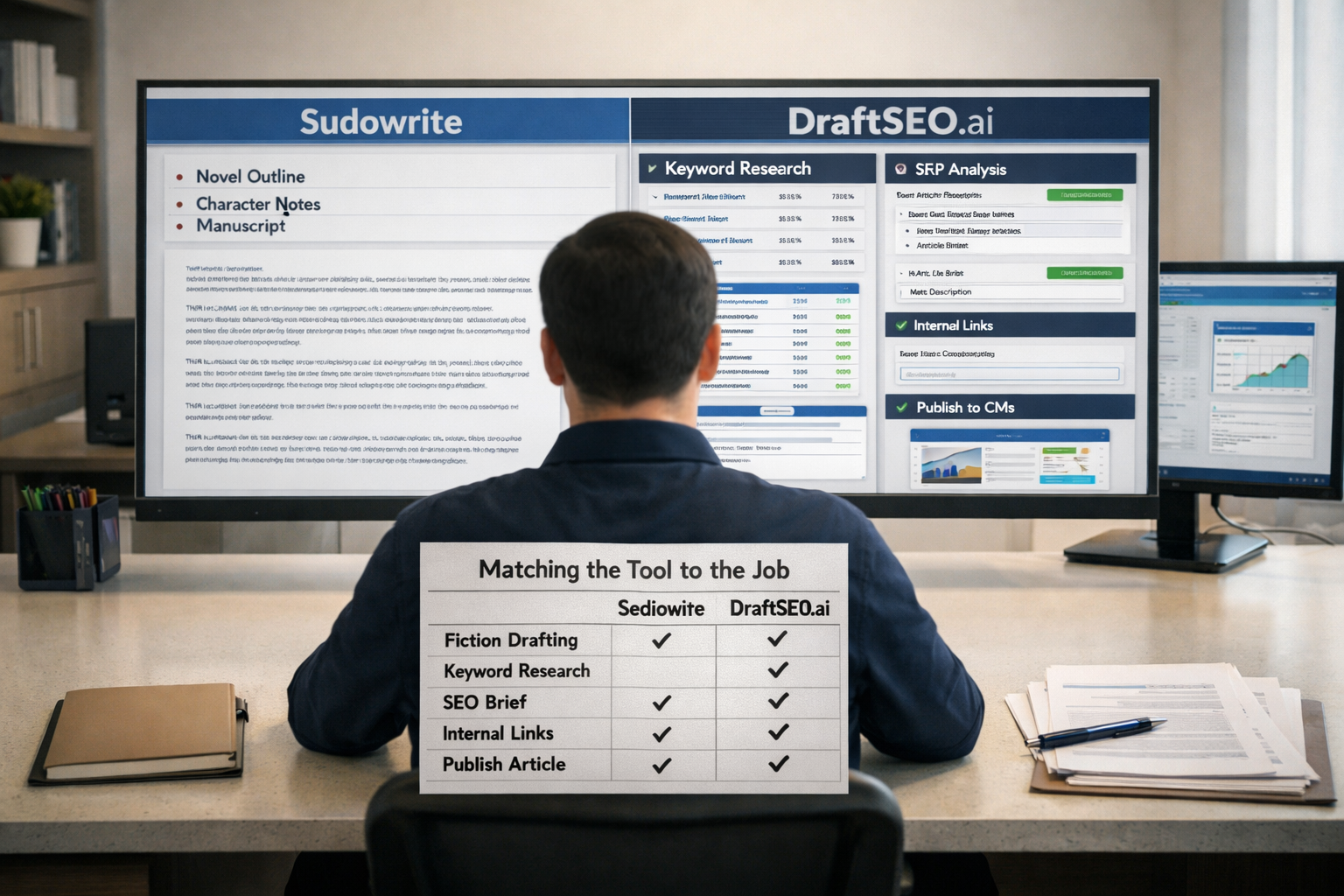
Before switching tools, run through what you're actually trying to produce. Fiction drafts and SEO articles have almost nothing in common at the workflow level, even though both start with an AI prompt.
- Define the output: a novel chapter, a landing page, or a recurring blog article for search traffic.
- Check if the tool does keyword research or if you're expected to bring your own list.
- Confirm whether CMS publishing is native or requires manual copy-paste every time.
- Ask how article structure (headers, meta tags, internal links) gets handled, if at all.
- Test with the free trial credits most platforms offer before committing to a paid tier.
- Review one full sample article for editing time required, not just read-through quality.
- Compare monthly article volume against your actual publishing calendar, not a hypothetical one.
Skipping step six is the most common regret. A tool can write fast and still need 40 minutes of editing per article to fix structure and factual gaps.
If your checklist points to recurring, keyword-targeted articles rather than manuscript pages, it's worth testing an SEO-first workflow directly. DraftSEO.ai includes a free trial with starter credits, and you can review current plan details on the pricing page before deciding how many articles a month you actually need.
Frequently Asked Questions
Is Sudowrite good for SEO blog content?
Not really. Sudowrite is optimized for fiction pacing, dialogue, and character consistency, with no built-in keyword research, header structuring, or publishing tools, so SEO content still needs a separate system layered on top.
Do Jasper AI and Copy.ai include automatic publishing to WordPress?
Some plans offer limited integrations, but neither is built primarily as a publish-on-autopilot system. You'll typically still export or manually format content before it goes live on your site.
How many articles does DraftSEO.ai generate per month?
DraftSEO.ai generates 30 articles a month for each connected site, with native CMS integration for publishing and a free trial that includes starter credits to test the workflow first.